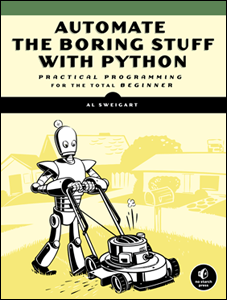
 Its been a long time since I’ve directly touched code. After watching a bunch of YouTube videos and reading articles about getting back into programming, I decided to start with what’s considered the most-easily-grasped language today: Python. During my research, one of the most-recommended books to begin learning with was Automate the Boring Stuff with Python, by Al Sweigart. The book is rated well on Amazon, but was also released under the Creative Commons license, so its available online and in PDF format, for free.
I skimmed the PDF of the book and found it intriguing, so I started working through it, discovering two complimentary resources along the way: (1) a YouTube walk-through of the beginning chapters of the book by the author, and (2) a full course centered around the book, by the author, hosted at Udemy, an online learning site.
Over the past few days, I followed the YouTube videos, working through them and their associated chapters in the book. I then started the process over again using only the book, to see if it was different – the content is the same, but there are details provided on YouTube and in the text which differ slightly. In a few days, I plan to begin the Udemy course, which costed $10 and is comprised of 51 lessons, which run at 9.5 hours.
[edit] The YouTube videos are the first 15 videos from the Udemy course.
So far, the opening chapters have not been difficult. I find myself comparing it to Pascal, which I haven’t used in decades, but which I enjoyed and remember a little. Python has similarities, which I’m sure most programming languages do, but its definitely not the same. It feels “looser” than Pascal. Lines aren’t finished with semi-colons. Indentations MEAN something – they determine what level code is on when nested. Its fun to engage my brain with this, after so long without it.
Here are links to the resources above:
 REDO FROM START
One thought on “Automate the Boring Stuff with Python”